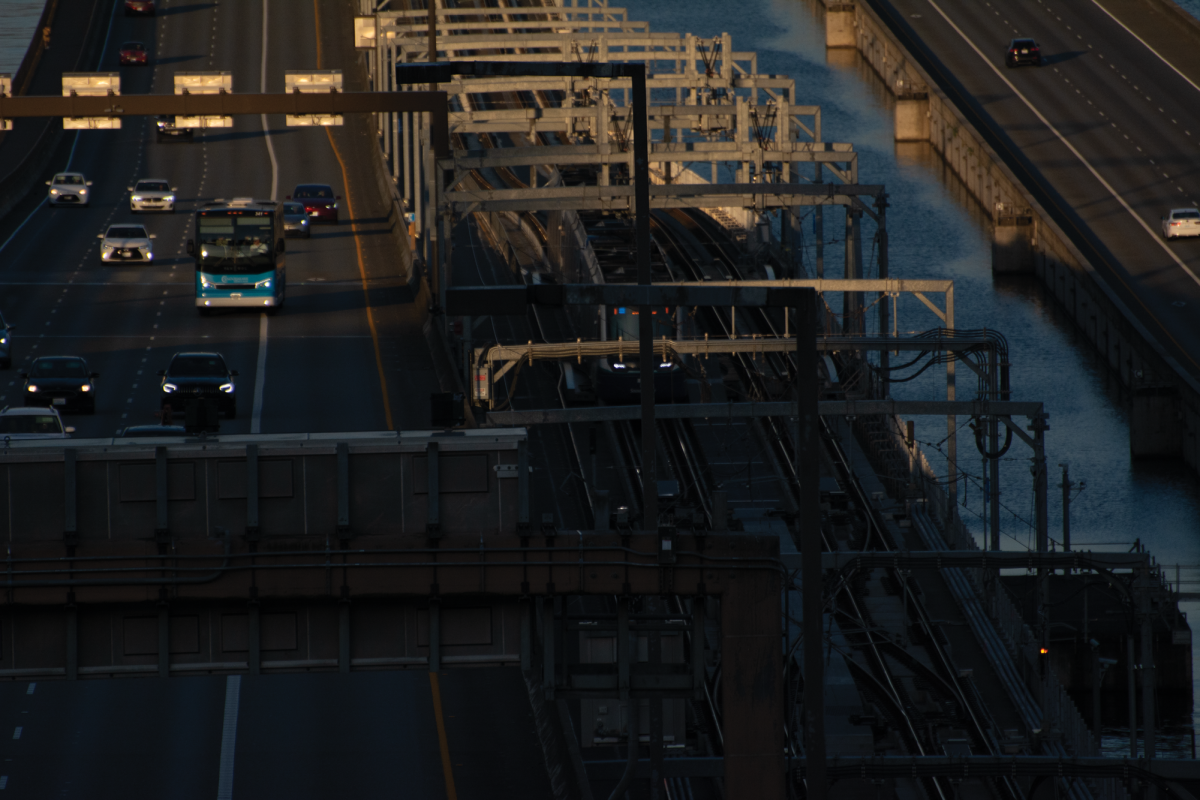
Opened on March 28, Sound Transit’s expanded 2 Line now runs from Redmond, through Bellevue, to Seattle and ending in Lynnwood. The connection itself goes across Lake Washington, running along the I-90 bridge into Seattle. It’s been nearly two years since the launch of the original 2 Line, which connected Bellevue and Redmond via light rail. The recent East Link Extension brings the 2 Line into Seattle, allowing for light rail access from Bellevue to Seattle.
First approved by voters in 2008, the East Link Extension had an original cost estimate of $3.7 billion. This cost included many different pieces of the project: planning, construction, review and supervision. Upon completion, the total cost added up to $3.8 billion. Although Sound Transit does charge fares, Deputy CEO of Capital Delivery Terri Mestas (she/her) said that they are not its main source of revenue.
“Our fares are designed to be affordable for people across the region, including young people and students,” Mestas said. “In fact, Sound Transit does not charge fares for anyone under 18.”
While the fares remain reasonable, Mestas said Sound Transit is still with budgeting challenges, and the process to build the 2 line to where it is now was long and expensive.
On April 22, 2016, Sound Transit broke ground on the project’s first stage: the downtown Bellevue tunnel. At this time, the plan was to create one continuous line running from downtown Bellevue through Seattle and over the Homer M. Hadley Memorial Bridge — commonly known as the floating bridge — to the west side of Lake Washington. In mid-2017, construction began on the floating bridge to create what would become the East Link Extension. However, the original preparations for the project were completed far before this date: in stages between 2008 and 2012, HOV lanes on the outer lanes of the bridge were preemptively constructed to mitigate traffic during the main construction phases of this project.
While the entire 2 Line was originally intended to be finished by 2020, the project — specifically the East Link Extension — faced numerous challenges and setbacks. Building a light rail along a floating bridge had never been done before, and construction was long and complex, resulting in a six-year delay in the project. Because the bridge moves with the lake, installing fixed rails was a difficult feat from an engineering perspective and thus took a great deal of time and resources. Additionally, construction was shut down for COVID-19 and delayed for several years. After nearly two decades of planning and construction challenges, the East Link Extension across the I-90 floating bridge opened March 28.
The extended 2 Line now covers over 14 miles of track and boasts 10 stations. With operation hours beginning as early as 4:08 a.m. and as late as 11:54 p.m. on weekdays, each stop sees a train every eight minutes, eliminating the need to track the schedule and ensuring the shortest possible wait times.
Mestas said that with its opening day serving over 200,000 passengers, the East Link Extension’s impact is already being seen. This was one of the longest days in the system’s history, second only to the Seahawk Superbowl Victory Parade, which saw similar numbers of passengers. This is not the end of Sound Transit’s public transportation goals for the area, with many systems of light rails and buses in the works, including lines along State Route 522.
“Sound Transit remains committed to delivering a regional system that connects more people to more places and more opportunities,” Mestas said.