As Washington approaches yet another extreme-heat summer and a large El Niño predicted by the National Oceanic and Atmospheric Administration, King County is making sure citizens are aware of the dangers of high temperatures and how to evade them.
El Niño is a weather event that increases temperatures throughout the northwest and midwest of the U.S., including Washington, according to NOAA. While these events typically have temperature increase peaks in December, they normally last between nine to 12 months. Within the next month, there is an 82% chance that an intense El Niño weather event will emerge.
As the temperature increases during the summer, The National Weather Service may issue heat advisories. The NWS is the federal provider of weather data and advisories, as well as safety information regarding the weather across the U.S. They issue heat advisories when the temperatures for an area exceed what the population is acclimated to.
Heat advisories are issued because high temperatures increase heat-related health risks including heat stroke, heat exhaustion and rhabdomyolysis, which is a rapid breakdown and death of muscles caused by high temperatures and physical exertion, according to the CDC.
During a heat advisory, the NWS recommends staying indoors and drinking plenty of water. If going outside is necessary, the CDC recommends taking frequent breaks in the shade. During extreme heat, King County recommends cancelling outdoor activities such as children’s sports. King County will also operate both daytime and overnight cooling centers during extreme heat events.
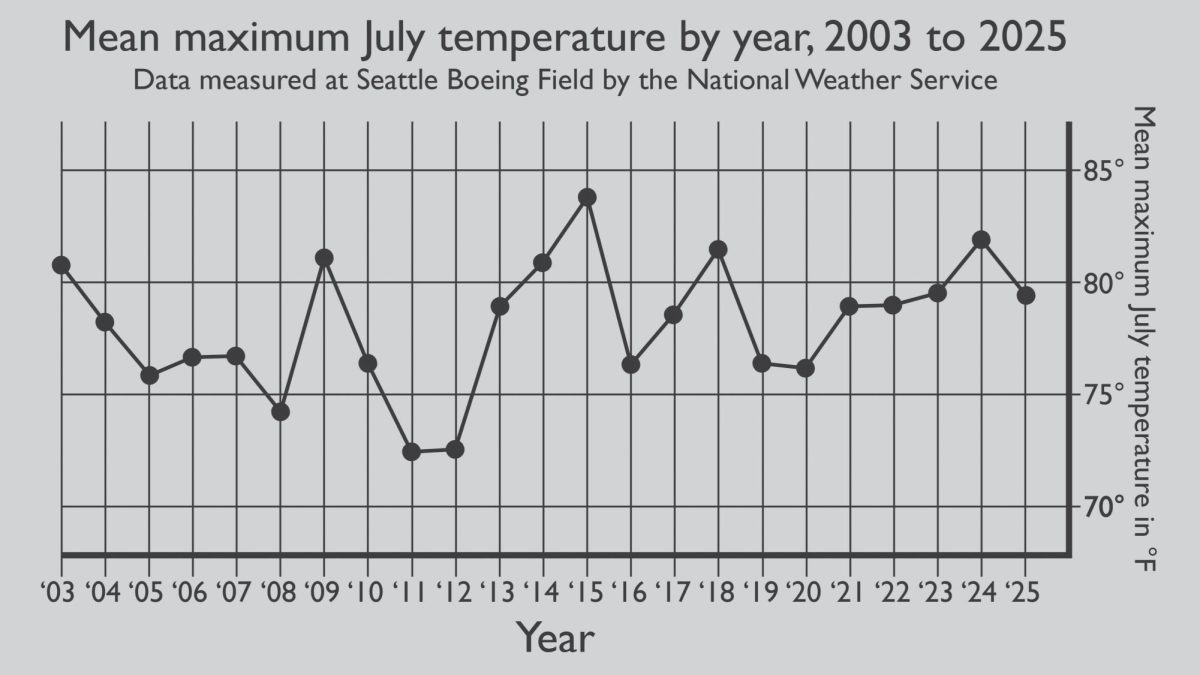
High temperatures, especially during the summer, pose a serious health risk. From 2000 to 2020, roughly 43 people on average were hospitalized by heat stress each year in Washington, according to the Washington State Department of Health. During 2021, the hottest summer recorded in Washington, 437 people were hospitalized for heat-related reasons. King County has said it’s especially important for the elderly to take caution during high temperatures as they are at a higher risk of heat-related illness. Also at risk are children under the age of 4, overweight people and people who are already sick. Because of the upcoming El Niño extra caution should be taken during this summer.