In the 2025 general election, Bothell residents voted to renew the 2016 Safe Streets & Sidewalks Levy with almost 70% approval, allowing the Bothell’s government to continue funding transportation maintenance and improvements across the city for another nine years. Bothell’s director of the Public Works Department Erin Leonhart (she/her) said that the problem areas addressed by this levy have expanded with its renewal. The city initially established the Safe Streets & Sidewalks Levy in 2016 because it required more funding to address infrastructure concerns with sidewalks and local roads. These concerns were not covered by past funding efforts.
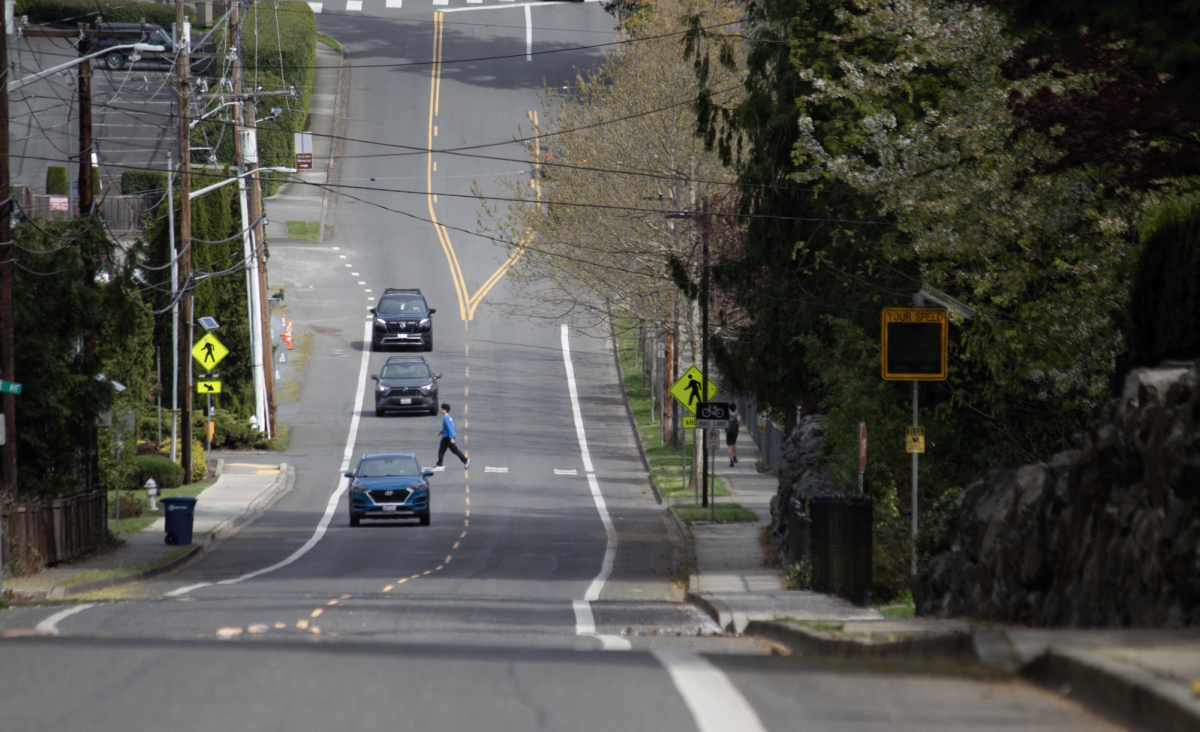
“We’re doing major maintenance projects so that we don’t have as many potholes and that type of thing. Tree root intrusion in our sidewalks is often a problem,” Leohart said. “Our crews really try to make sure that all those thoroughfares, however anybody travels, are safe for them.”
In addition, the renewed funds will help expand maintenance for Bothell’s trails and other infrastructure. Furthermore, the levy renewal will fund the construction of new projects.
“We would go out for renewal of this existing levy so that we could not only take care of what we’ve already built out there, but also that we could add more sidewalks and add more infrastructure for the community to enjoy,” Leonhart said.
The Safe Streets & Sidewalks Levy collects funding as a property tax at a rate of 50 cents per $1000 of property value. Thus, a home valued at $1 million would pay $500 towards the levy per year.
“We estimate that it will bring in a little over $10 million,” Leonhart said. “About 40% of that — about $4 million or so — will go towards street operations, and then the remaining funding will be used for major maintenance activities.”
As part of the Capital Facilities Plan, which oversees all improvements to the city, the Transportation Improvement Plan focuses on facilitating transportation around the city. Various task forces, including consultants from the community and the city council, rank the proposed projects to determine which are most crucial.
“One of the very first projects we completed with the first Safe Streets & Sidewalks Levy was the sidewalk on (188th St. Northeast) that goes between the Bothell High and Pop Keeney Stadium,” Leonhart said. “We met with representatives from all of the Bothell-area schools. That was the project that rolled to the top as being the highest priority for a safe school walk route.”
She also said that, based on their inventory of Bothell’s major streets, the city estimated the cost of replacing every missing sidewalk at hundreds of millions of dollars. However, in 2024, the original Safe Streets & Sidewalks Levy generated $5.8 million in total revenue. In order to determine the most efficient use of money, Leonhart said that the City of Bothell worked with the city council and other consultants to develop a scoring system and rank areas in need of improvement.
“That’s based upon proximity to schools and proximity to low-income neighborhoods,” Leonhart said. “We make sure that the very limited investment or resources that we have are used where they’re needed the most.”
Bothell publishes an annual report of its funding use from the Safe Streets & Sidewalks Levy. Leonhart believes this accountability, in addition to the focus on community involvement, contributed to the success of the levy renewal. She said that Bothell relies heavily on feedback to understand where improvements are most needed. Residents can fill out a Customer Action Request to report issues in code compliance, parks or public works. Most traffic safety requests can be directed towards Bothell’s Transportation Department.
“We’re here to respond and at least consider when folks have questions or need things from the city. We don’t want an unsafe condition to continue to exist,” Leonhart said. “People assume that it’s already been reported to us, but we can’t be everywhere all the time.”