Kenmore plans to implement new transportable traffic cameras as part of the Kenmore Automated Photo Enforcement program later this year. These cameras will move between council-approved sites to the zones with higher speeding numbers. Since the KAPE program’s launch in the spring of 2023, Kenmore has seen a drastic decrease in speeding violations. In camera equipped areas such as the Arrowhead school zone, the number of drivers exceeding the speed limit dropped from 99% to below 1%. Given the KAPE program’s success, Kenmore has started working on camera expansions to the system.
Kenmore’s traffic engineer Tobin Bennett-Gold (he/him) is responsible for collecting and analyzing traffic data. Then, he finds safe and efficient solutions to the problems he identifies, whether those are increased collision rates or low speed limit compliance rates. The KAPE program is one of those solutions.
“Our KAPE program covers all of our traffic safety cameras,” Bennett-Gold said. “We have cameras at specific locations because that’s where our engineering analysis showed us that we had pedestrian conflicts that could only be solved by a conspicuous enforcement presence.”
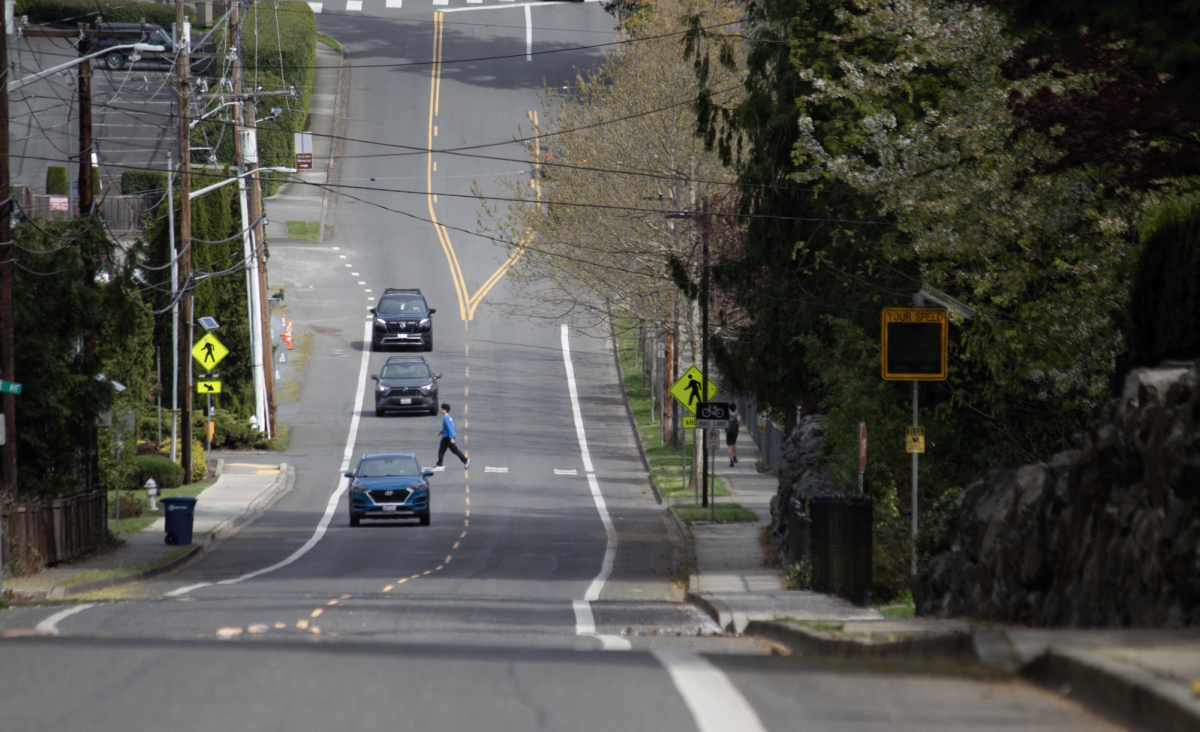
Pedestrian conflicts occur when a vehicle and pedestrians’ paths of travel cross in a potentially dangerous way. Using transportable cameras allows Kenmore to provide a deterrent against speeding in more locations than a fixed camera setup could.
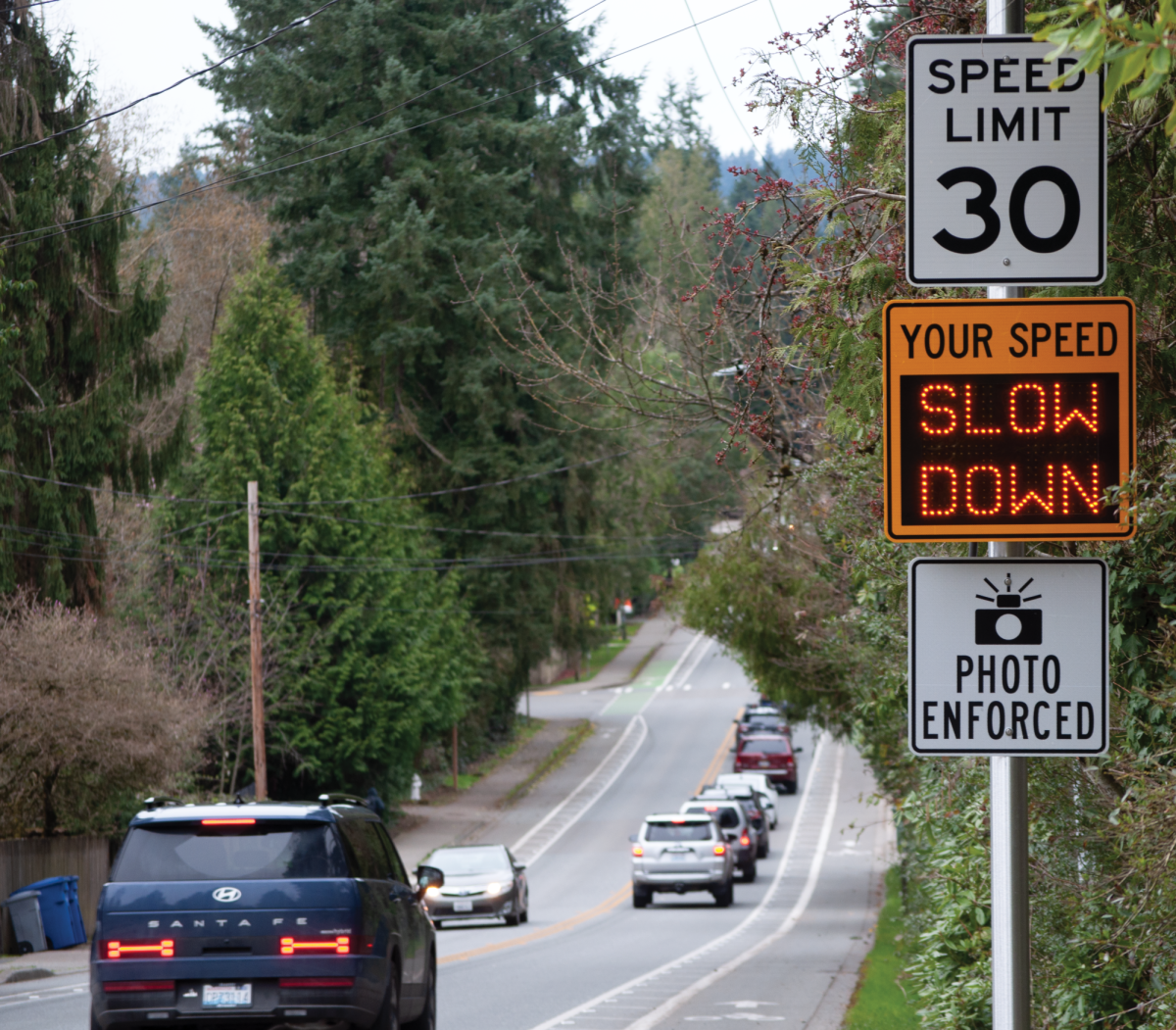
“We’ve signed the areas that are approved for photo enforcement as being photo enforced — and the camera may be there or it may be somewhere else,” Bennett-Gold said. “But we want to maintain people’s awareness that this is an area where we’re permitted to do enforcement.”
If both a camera and radar sensor confirm that the driver was speeding, the video and data are sent to a police officer who then manually confirms that speeding occurred. Only after these steps is a driver issued a ticket by the police department.
“All of our revenue from the program is dedicated to safety spending,” Bennett-Gold said. “That doesn’t just go into the city’s general fund. It’s kept separate. It pays for program expenses and safety investments. A lot of times, people who do call us up, they say, ‘you’re just reaching into everyone’s pockets.’ And it really gives them pause when they find out that 99% of drivers are not getting a ticket.”
Bennett-Gold estimates that the program’s gross revenue was about $5.3 million in 2025 compared to $700,000 in 2024. Additionally they estimate camera implementation and upkeep costs were roughly $620,000 in 2025 and $200,000 in 2024. This revenue is spent on maintaining the program itself, as well as other safety projects like the $11,000 for flashers marking Arrowhead school zone and $6,700 for bike lanes along 80th Avenue.
However, installing traffic cameras isn’t the city’s immediate reaction to traffic safety issues.
“We might look at narrowing lanes to make the driving environment feel more cramped so that people feel less comfortable going fast,” Bennett-Gold said. “On lower-speed roads, we might add speed humps. We can add chicanes or meandering to the road so we don’t have speedways. We can also do speed feedback signs, and we always do those with photo enforcement.”
The four transportable cameras will rotate between 16 locations every two to four months across Kenmore. The areas are chosen based on rates of traffic safety concerns, such as speeding and other dangers. The cameras will be located along 61st Avenue, Juanita Drive, 170th Street, Simonds Road and 80th Avenue.
“What we’re hoping to do is have a strong speed management effect like we see in our existing fixed-position speed cameras, but to do that with a lighter touch,” Bennett-Gold said. “Instead of adding 16 cameras, we’re trying to use four and just move them as needed.”