Raines reels it in for retirement
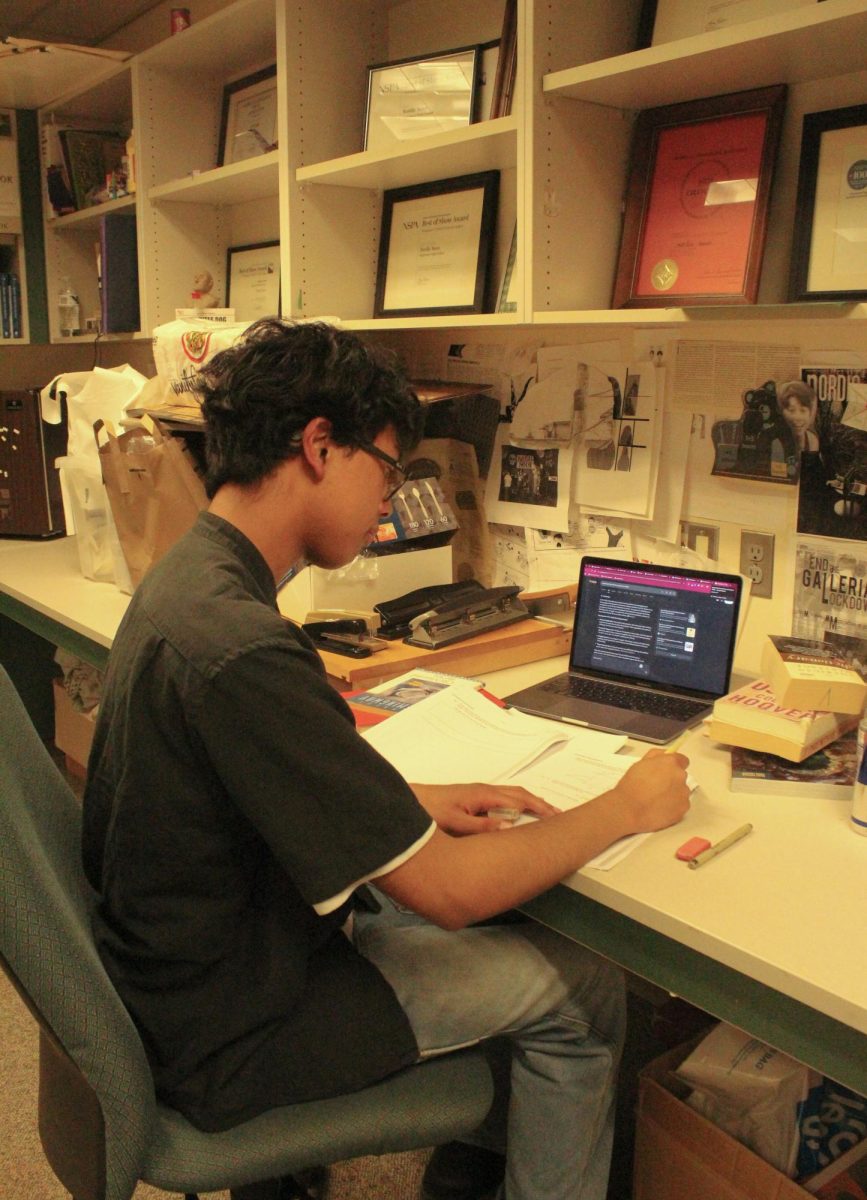
From South America to Europe, Microsoft to NSD, history teacher Tim Raines (he/him) has been in various careers around the world. In his 20 years of teaching — 10 of those being at IHS — Raines has taught a wide variety of subjects, including world history, creative writing and economics. Raines said that economics has been his favorite subject to teach because of the hands-on simulations. Raines leads his classes by letting students learn through exploring the material. He prefers to let them make their own discoveries as opposed to lecturing them. To him, this is the most rewarding part of teaching.
“I like to see the ‘aha!’ moments when kids start putting things together, because I’m known for sitting back and leading from behind and letting students figure things out,” Raines said. “You hear the conversations, and you see them draw the connections, especially with our IB history class.”
Raines began teaching after working as a project manager in the tech industry for over a decade. Despite how long he worked there, he described his career there as accidental.
“I wasn’t studying for that,” Raines said. “I was in the right place at the right time in the late 80s.”
Raines described his life in tech as lucrative, but very busy. He said that he often worked 65 hours a week.
“People ask me, ‘what movies did you see in the 90s?’ And I was like, ‘I didn’t see any movies in the 90s. I was at work all the time,’” Raines said. “‘What was your favorite TV show in the 90s?’ ‘I couldn’t tell you because I was working so much.’”
After working at Microsoft for 11 years and facing burnout, Raines chose to leave the tech industry. Combined with his love of history, teaching seemed like the right path
going forward.
“Once that was coming to an end, I thought, well, this is gonna be the time to actually act on something that I feel more passionate about,” Raines said.
Along with his love for teaching, Raines said he also has a passion for learning languages. Raines grew up speaking both English and Swedish. He lived in Sweden and attended a French immersion school when he was four, which surrounded him with a multitude of languages from a young age. Raines also speaks French, German and Spanish.
“I’m going to spend time with languages, perfecting what I already know because I’m losing some of it here and there, and I would like to keep up the investment that I’ve made rather than dabble in anything new,” Raines said. “I keep talking about trying to learn Mandarin, but that never gets off the ground.”
Complementary to his love of languages, Raines also enjoys traveling. So far, he has traveled to 72 countries. He said Sweden and Japan especially stood out to him. “I’ve gone to Sweden many times in my life, and I feel like it’s a second home to me,” Raines said. “I also really love Japan because I don’t speak a word of Japanese, and I love diving into a place and actually not knowing the language, but also feeling completely safe.”
Even after traveling around the world, Raines said that he sees himself visiting many more countries after retiring. Outside of traveling, Raines plans to sleep in more and spend more time on himself. Even with all of these plans, retirement is bittersweet for Raines.
“I will miss my colleagues. I will miss my students,” Raines said. “I’ll miss seeing ‘aha!’ moments and the light bulb go off, because this is a unique environment for that. I can’t really produce that anymore.”
Lafavour sails into the sunset
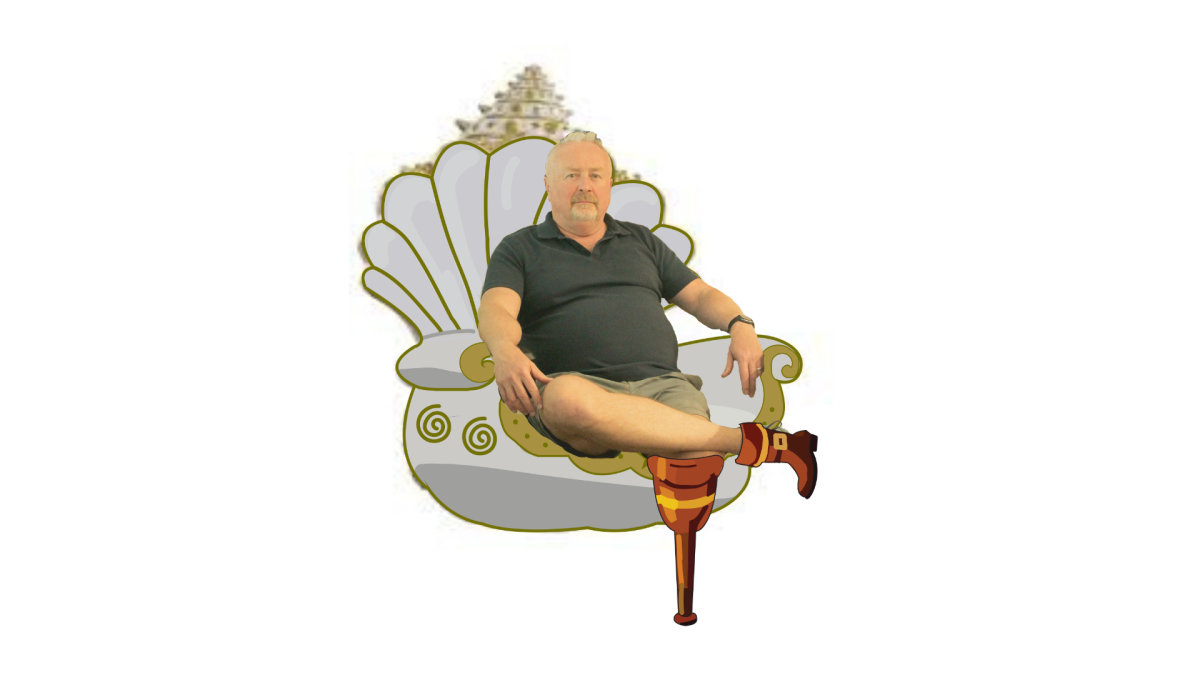
Sometimes opportunities appear in unexpected places. Though he has taught for years, academic lab teacher Kenneth Lafavour (he/him) said he stumbled upon an opportunity to teach in special education when he was working as a substitute teacher.
“I was only supposed to be in there for about 20 minutes or so, and as I was walking out the door, (an experienced special education teacher) came running out the door after me,” Lafavour said. “He said, ‘Ken, have you ever thought about working in special education? Because the way you were teaching those kids and explaining things to those kids was just so right on that. You broke things down so that they could understand that; I just was so impressed with how you were doing that.’”
Before coming to IHS, Lafavour worked numerous other jobs. His last job was working as an English teacher in Nagasaki, Japan, where he experienced a different culture than what he was used to in the U.S.
“For eight years, I lived within about a two-minute walk of the epicenter of the Nagasaki bombing,” Lafavour said. “I used to walk past the site where it blew up on a daily basis. The first time I went there, I was like, ‘ooh, ahh,’ but after eight years, it was like, ‘oh well, just part of the walk home.’”
Lafavour said that his teaching experience in Japan was a lot different than in the U.S. He said his students in Japan exercised frequently. In P.E., students had to run a mile before attendance, and Lafavour said he would sometimes run with them
“Nobody passed me. I was running the front row,” Lafavour said. “There were maybe eight or 10 kids out of a student body of maybe 1,000 that beat me. But, I was a lot younger then. I couldn’t do that now.”
Lafavour, wanting to work with youth instead of being around adults, decided to settle into education. He said that it is especially rewarding to work with kids who may have the potential to impact the world. However, Lafavour said the most important lesson he wants to instill in his students is to be happy with who they are.
“I see kids that have moved on from school and been successful. I had worked with one kid who went on to play in the NBA and became an NBA All-Star. Another student I had ended up flying F-15s in the Air Force,” Lafavour said. “It’s just fun to see students after they get out of high school, out in the world, being successful and happy at whatever they’re doing. I ran into one former student a couple of years or so ago, and I said, ‘so is being you pretty cool?’ And he said, ‘yeah, it’s not a bad deal.’”
Lafavour said he compares special education to spotting someone at a bench press. Students need to learn how to be independent, but he is there to give them a nudge when needed.
“You get to that point where, ‘oh, I shouldn’t have done that last rep,’ and then you just need somebody to put their two fingers in there and just kind of lift it a little bit, put a little bit of help there,” Lafavour said.
Lafavour said he wishes for people to live their lives how they want to and experience everything that they can. He especially believes in living one’s life to the fullest.
“Life is short, and get as much out of it as you can, but do it the right way; don’t trample other people to get there,” Lafavour said. “I’m pretty old – maybe the oldest person on the staff now. Just get the most out of life that you can because there’ll be a day when you’re old, and you look back, and you’ll say, ‘that hasn’t been a bad wash.’”