


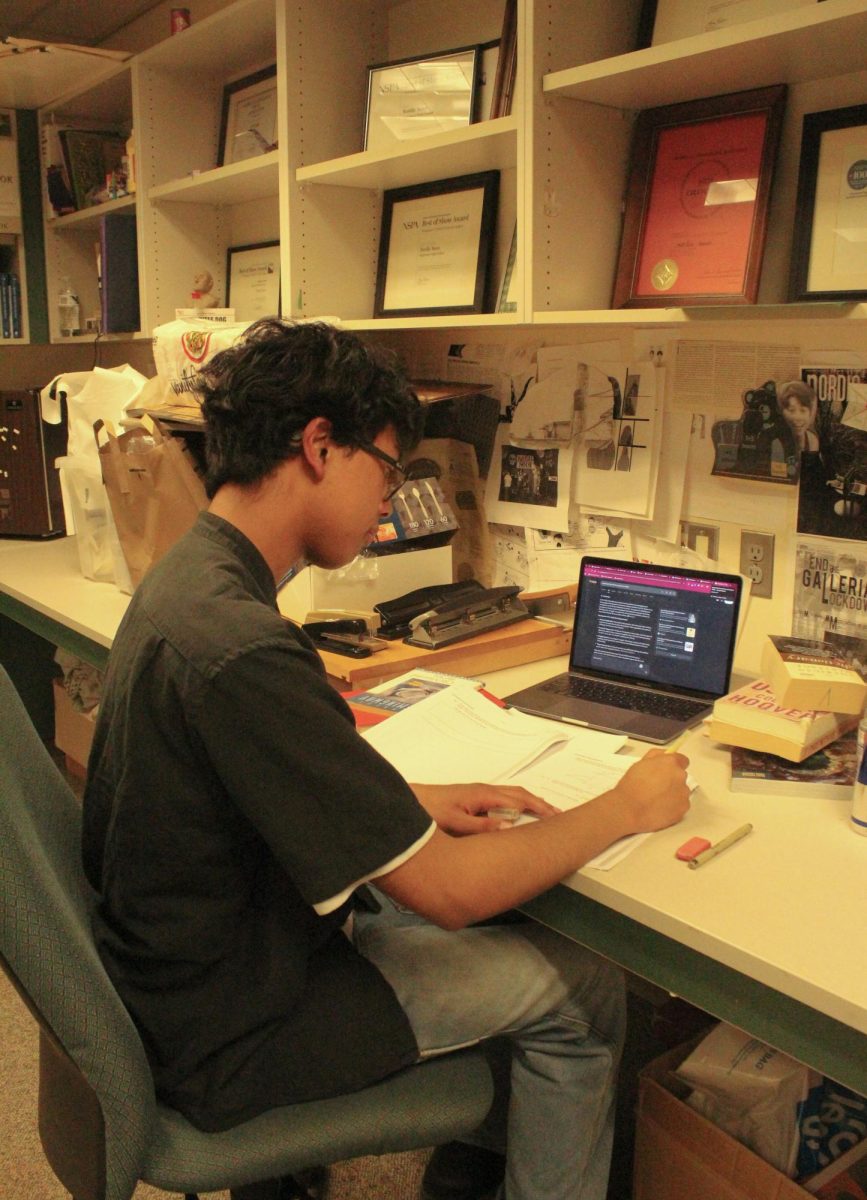
For many students, the night before an exam is spent frantically cramming information into their brains to make up for missed days of studying. In 2024, up to 70% of students across all educational environments struggled with procrastination, with 60% of adolescents reporting that it affected other daily aspects of their lives, like sleep and free time, at high levels, according to the National Library of Medicine. Even still, study habits like these have become a common way for students to complete the various tasks assigned during the school year. Strenuous schoolwork, upcoming tests or extracurriculars are just a few activities that students tackle on a daily basis. However, as the workload starts to pile up, it can be hard for students to maintain healthy study habits. Instead, they turn to last-minute cram sessions that can affect sleep, eating habits and their overall well-being.
Senior and IB Diploma student Nareshatama Nainggolan (he/him) said that he often struggles with falling back to cramming as his go-to study method. During last year’s IB testing season, Nainggolan said he, alongside several of his friends, studied until 4 a.m. to prepare for the IB Computer Science exam. He said that one of the biggest issues he and many other students face is the lack of time to study. Nainggolan said that this can lead to students having to choose between their schoolwork and free time, which can in turn make it difficult to maintain a balance between social lives and academics.
Sophomore Adelise Song (she/her) said that the amount of extracurriculars she has taken on — FBLA, DECA and gymnastics — have significantly increased her overall workload. This has reduced the time she has been able to study, making her more prone to procrastination.
“This was my first year with a bunch of new clubs and sports hours,” Song said. “I was kind of overwhelmed by the amount of work to do and what I had to do to balance it.”
Song said that she typically tries to maintain good study habits when preparing for exams, like using practice problems, note sheets or active recall. However, she still finds herself turning to unhealthy habits, such as cramming the night before the test.
“I don’t have time to study because I have a bunch of extracurriculars and homework,” Song said. “And then it’s either sleep or study, so then I end up cramming everything, and I don’t get sleep.”
Senior Janet Leong (she/her) has faced similar issues with extracurriculars taking up too much time. She said being a part of cross country heavily impacts her schedule and ability to study.
“I think that also contributes to the amount of time you have to study,” Leong said. “You’ll end up cramming no matter what because you just don’t have the time to do it.”
However, large workloads and cram studying impact more than one’s daily free time.
Song said that she often doesn’t sleep for multiple days when trying to work on large amounts of homework or study for upcoming tests. As a result, she has faced health issues like hallucinations and frequent fainting. Song said that she has fainted after several nights of pulling all-nighters, causing her to arrive later to school and miss class instructions. Despite these negative impacts, however, Song said she continues to pull these all-nighters because they motivate her to finish her work quickly.
“I’ll sacrifice my sleep so that I can finish this work that will clear up more time for the next piece of homework so that I can finally rest,” Song said.
By creating a high-pressure environment and excess stress, cram culture can often lead to symptoms such as severe burnout or stress down the road, according to UCLA Health. Leong said she has suffered health issues that come from cramming before exams, especially sleep deprivation. In the past, lack of sleep has impacted her ability to think clearly and articulate her thoughts on essays and tests. Leong typically attempts to maintain healthy study habits when preparing for exams, but she also finds that at times, she has to fall back on cramming even if she starts to study a week before a test. Leong said that while part of the issue is procrastination, the biggest issue that she and other students face is the amount of material students are being tested on.
“It’s really overwhelming,” Leong said. “For me personally, sometimes I find that it’s scary for me to even try to stress over it.”
Nevertheless, there are resources and strategies that can help students prepare more thoroughly for their exams, without having to worry about last minute cramming. IB Physics teacher Christina Gutting (she/her) said that using flashcards, Quizlet and other tools can help students prepare better for exams. In addition, she said that it is important for students to understand not just what they should study, but how they study as well.
“Address how you study best, because not everyone studies well with note cards,” Gutting said. “Try different study methods and find one that really works for you.”
Gutting also said that identifying and taking into account how they recharge is crucial to being able to focus and study well. She emphasized that by being aware of the most efficient ways to study and using methods that are personally effective, students may be able to prevent themselves from having to cram.
“Find out how you tick,” Gutting said. “What works for you, what doesn’t work for you, and maybe that’s the root of the problem.”







Audrey • Jun 10, 2026 at 9:31 PM
Wow… This article is life-changing. It’s almost as if my GOAT Kirsten Hau wrote this article.