To senior Emily Pranzini (she/her), the idea of success is rooted in something stronger than physical ability and deeper than a stain of ink scratched onto paper.
“Some people could say they failed at running five miles if they hit 4.9 miles. Some people say they failed if they got an 89 instead of a 95,” Pranzini said. “I would encourage them to ask themselves or talk to somebody about why they think they failed, and they could relate back to their view on success, which I think everyone should consider at some point.”
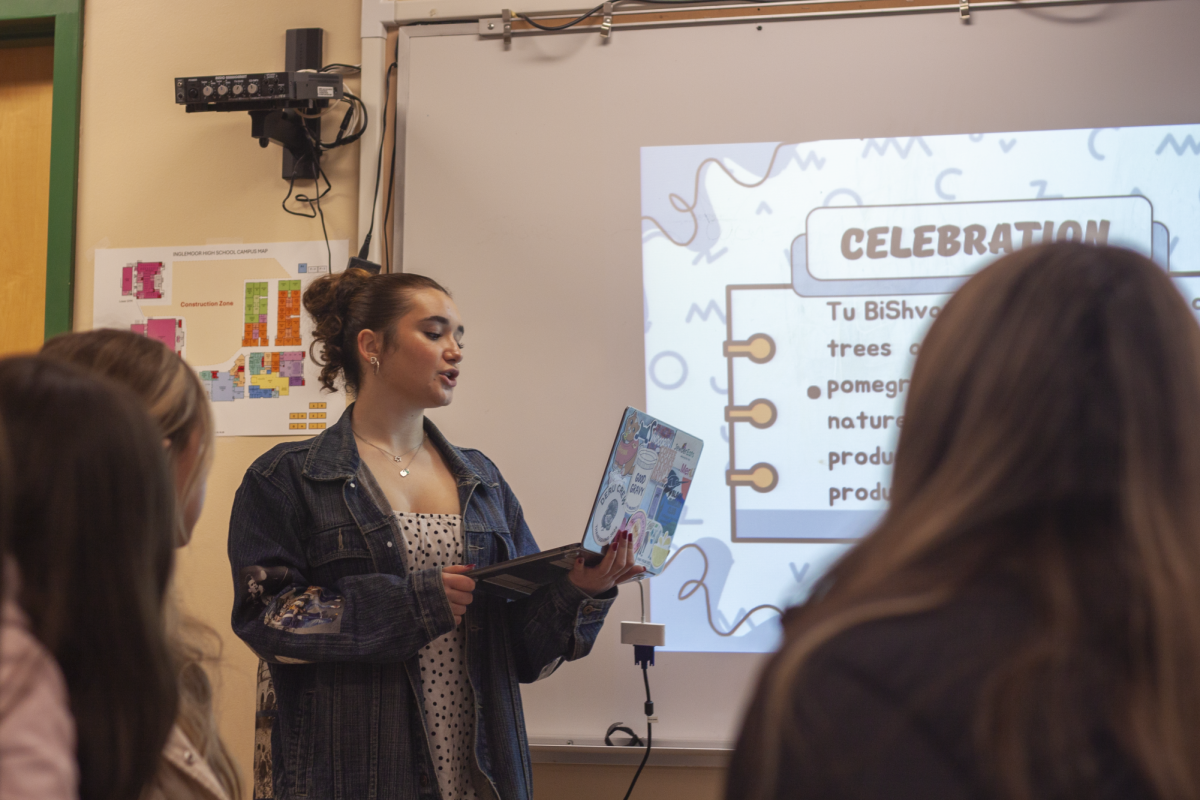
In an environment where high scores and straight A’s often sit at the top of the academic hierarchy, Pranzini has learned to define success by honoring the culture and values she grew up with. As a sophomore, Pranzini co-founded the Jewish Student Union club and has helped lead it ever since. Rather than striving for popularity, the club’s goal is to create a safe space on campus for Jewish students or anyone curious about Judaism and to share the welcoming feeling of Judaism with others.
“We didn’t care how many people came. If five people came, if one person came — that made us happy. The success or how big the club got was never the reason we were doing it,” Pranzini said. “I’m doing it because, as a high schooler, it feels like our school doesn’t have a lot of Jewish education or Jewish students.”
Each week, the club leaders prepare a learning topic for their club activity. While Pranzini said that it can be a let-down when the lesson doesn’t go well, such as when people are distracted or disrespectful, she is proud that people continue to show up — whether that be to listen or for the food.
“I’m just happy that we see consistent faces,” Pranzini said. “They show up. They signed up. They come.”
Pranzini said her Jewish faith and family have helped her find satisfaction in growth beyond merit. Just as she views failure through a growth mindset, Pranzini defines success as an ever-expanding commitment that is shaped by her cultural heritage.
“If I can give it an effort — if I can say I’ve tried and I’m a good person, then I’m successful in life,” Pranzini said. “Yes, I do want to get into a good college, and I do all the ‘successful things’ on paper, but when you take a step back and look at the bigger picture, success isn’t something that’s obtainable. It is something you continue to work towards, and your values impact that.”
Sophomore Magdelana Velasco (any pronouns) also weaves their definition of success back to their roots, drawing inspiration from generations of artists in their family.
After learning to sew from their grandmother, Velasco challenged themselves to improve their skills from a simple pin-cushion project in middle school to more complex garments like a corset. Inspired by their mother, Velasco sees achievement in creating impact with their work in fiber arts.
“She pioneered a lot of Filipino art, in theater, in California and in the West Coast, so she’s doing a lot of really cool, hard work that’s made an impact,” Velasco said. “I aspire to do something similar. Since we don’t really have roots in America, it takes a lot of effort to put something down concretely.”
Carrying forward their family’s emphasis on cultural connection, Velasco spreads awareness of Southeast and East Asian culture to younger generations as a volunteer for the Red Envelope Collective. Volunteers help bring Asian heritage and tradition into elementary school classrooms through events and activities.
“I think that we genuinely had an impact on schools and learning, and that makes me really happy, and it really feels fulfilling to be able to do something outside of the curriculum,” Velasco said. “I really like working with kids because they’re always looking to learn and do something new, and they haven’t been molded by a system yet, so they’re still really creative and think outside the box.”
Velasco relates this form of community engagement to their broader understanding of success. Rather than viewing success as an independent achievement, they believe in creating meaningful progress by building on the foundations laid out by those who came before them.
“I have a really big mindset that you can achieve bigger things with other people,” Velasco said. “A big part of it also has to do with culture. There is a really, really big Filipino community culture. If you look out for others, they’ll look out for you — that whole village mindset is really uplifting.”
Within that sense of shared identity, Velasco feels a sense of achievement when they see Filipino culture gain recognition and visibility beyond their own community. For them, it is a special connection that they don’t get to share with many others.
“There’s a certain joy and pride I get when I see someone who’s Filipino that I might not even know achieve something because they’re representing us,” Velasco said. “It’s a feeling of joy and happiness being like, ‘I don’t know that person, but that’s my brother, that’s my sister, and they’re doing something great.’”