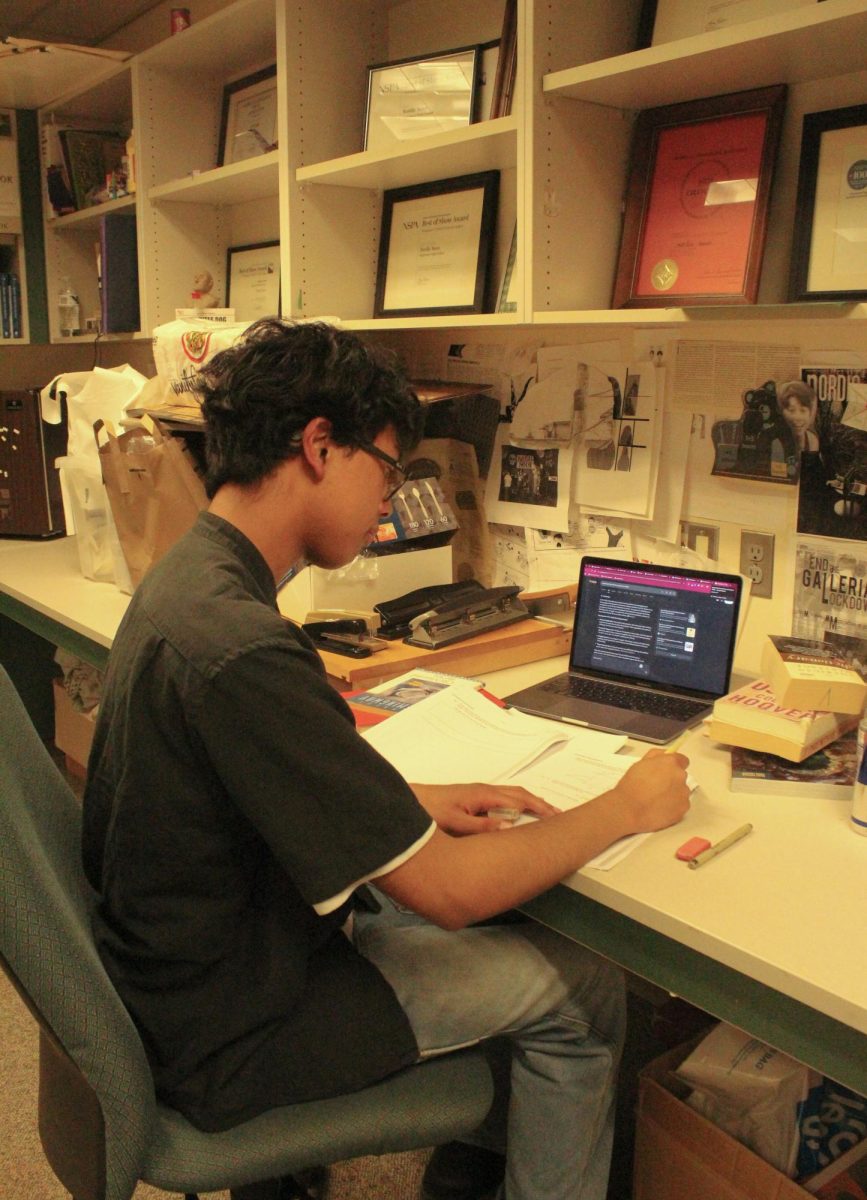

Rather than participating in extracurriculars or enjoying their free time, many high school students work. According to USAFacts, approximately 6.4 million teens are employed in the U.S. alone. Senior Oliver Wakeman (he/him) has worked multiple jobs, and he currently works at Chipotle, averaging 20 hours per week. He said he started the job a few weeks ago, and he often works late into the evening, sometimes getting home around 11 p.m.
“I’m usually more tired first period because I don’t get a lot of sleep,” Wakeman said. “I maybe do a little bit of schoolwork and then latest 12 (a.m.) is when I go to sleep.”
At Chipotle, Wakeman works at the “front of the house,” which means that he is the first employee customers interact with as customers have him assemble their meals. Wakeman said that his role requires constant interaction with customers, and the work environment can be demanding.
“You’re always moving. You’re never sitting down,” Wakeman said. “It can be chaotic, but it’s a good kind of chaotic.”
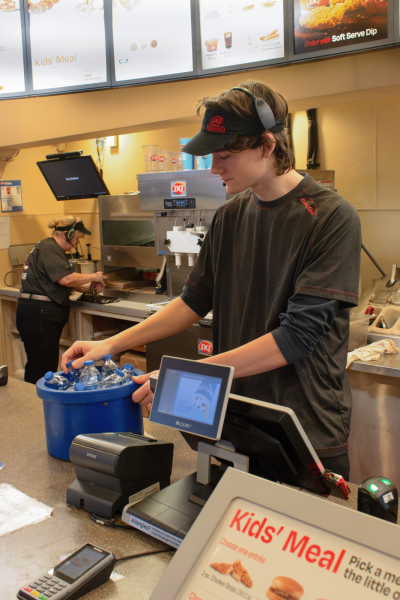
Junior David Stall (he/him) works primarily on weekends at Dairy Queen, and he has worked there for almost a year. Stall said that while working a job and balancing schoolwork is manageable, interactions with customers can present additional challenges.
“Sometimes customers don’t know how to treat me as an individual, so they don’t say things that are respectful,” Stall said.
Because of difficult customers, Stall said he has learned practical workplace skills, such as prioritizing customer service and maintaining professionalism at all times. Stall said that because he works at the drive-thru window, most of his interactions with rude customers are brief. As a result, he doesn’t find the job to be particularly stressful. Stall also mentions that he appreciates his manager’s flexibility with his working shifts. However, Stall acknowledges that some students may not have the same ability to control their hours based on their school schedule.
“I can imagine there are students that work jobs that have a lot more stress than I do,” Stall said. “There are some jobs that are really taxing.”
Senior Ellina Chang (they/them) spends most of their time working with kids as a swim instructor and lifeguard at the YMCA. Chang said that they’ve been working at the YMCA since 2024 and work 9-10 hours per week. While Chang enjoys their job, they said that certain aspects, such as short staffing or needing to pick up sudden shifts can create pressure in the workplace.
“There’s more pressure on you to cover for other people and work more hours, which is not ideal, but I think it’s an annual thing because there are people that leave for college after the summer,” Chang said. “So they’re very short-staffed.”
Senior Julie Farah (she/her) also works at the YMCA. She first started working as a lifeguard and swim instructor there in 2025. Farah said she found it difficult to manage and instruct kids because of their rowdiness and persistent defiance, and she said that her job requires a lot of energy and patience. Farah currently works as a lifeguard and swim instructor on both weekdays and weekends and averages 4-5 hours a week.
“It definitely taught me to be patient with people who have different skill levels,” Farah said. “Taking my time and trying to really explain it thoroughly so that everyone can understand it in their own way — that’s the big thing that I’ve learned.”
Freshman Jake Atkinson (he/him) also works with kids, and he works seasonally from early January through late February or early March at Powderpig, a ski school located in Snoqualmie. The ski area is far from where he lives, and Atkinson said his work schedule takes up most of his weekend, with his shifts ranging from 5-6 hours per week.
“The entire day is usually taken up getting there, doing my job and then coming back,” Atkinson said. “Pretty much all my Saturdays are just working and driving.”
Atkinson said while some of his peers have a lot more free time on weekends, he chose to work at Powderpigs because of his interest in skiing and working with children. Farah also said she enjoys the community environment when working with her peers. Farah said that over time, as she’s learned about being an instructor, she has become more comfortable in her position.
“I wanted to help people of all ages learn how to swim because I think it’s an amazing sport and skill I think a lot of people should know,” Farah said. “I want to be of help to the community.”