
Over the years, internet usage has sky-rocketed to an immoderate level, according to the World Bank. They state that from 2005 to 2024, the amount of the world using the internet increased by 52%. This, combined with widespread usage of social media platforms, brought a decrease in literacy levels, according to JAMA.
IB English teacher Annemarie McGoorty (she/her) said that in recent years, students have a preconceived notion that they should only read if it’s assigned for a class. McGoorty said she has seen this phenomenon reflected in her classes’ reading levels.
“I’ve noticed especially since COVID-19 that there’s been more difficulty in sustained attention for reading,” McGoorty said. “It’s been harder for students to read on their own, rather than just in class.”
During the 2024 to 2025 school year, there were 6,698 library checkouts at Inglemoor’s school library. In the 2018 to 2019 school year, 7,588 books were checked out. That’s an 11.70% decrease in library book checkouts and an average book per student change of 0.17 within a 7 year period.
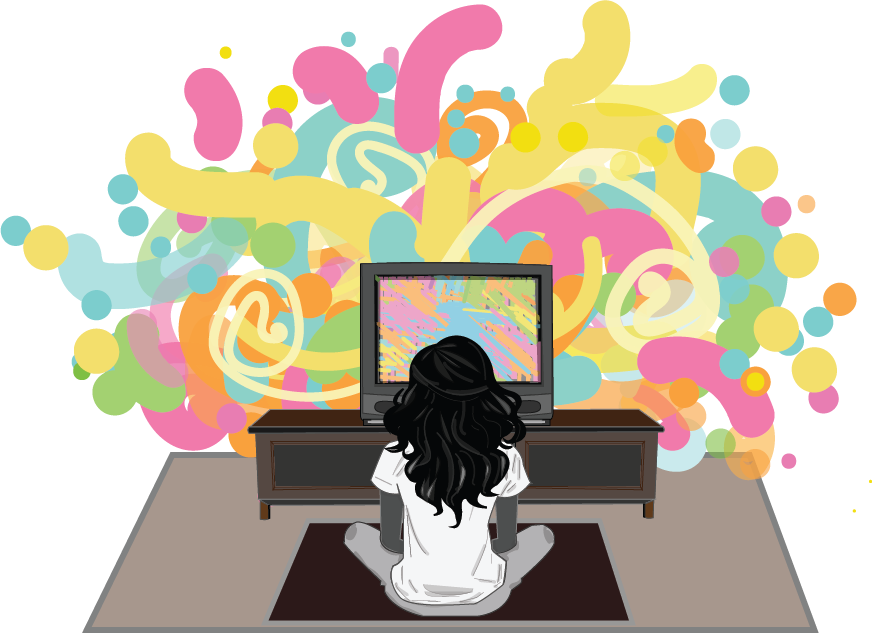
McGoorty said that during COVID-19, there was less structure in online school to facilitate students reading for longer periods of time. She also said that digital media platforms, such as TikTok and Instagram, now capture students’ attention rather than books.
“I think it’s easier to watch something or listen to something, and that’s a way more prevalent thing that students are practicing all the time,” McGoorty said. “It’s also more tempting at home to be drawn into stories that are more visual or auditory than sitting and reading a book.”
McGoorty said after COVID-19, academics and extracurriculars became more competitive. As a result, students are constantly pressed for time, and when they actually do have free time, it is often spent sleeping.
Sophomore Ashley Mhyre (she/her) traces her love for books back to her fourth-grade teacher, whose classroom encouraged reading through competitions. This sparked Mhrye’s love for books, and she started going to the library and reading on her own. She believes students who don’t regularly read are missing out on all the positives that come with picking up a book and taking the time to enjoy it, such as boosting classroom knowledge.
“Reading is like escaping reality. You can be whoever you want and do whatever you want in the books,” Mhyre said. “If your life is really stressful at some point, reading really helps you de-stress and imagine what you want.”
Mhyre said that even though social media can be a huge distraction from reading, there are some benefits. One example is a positive social media reading trend, which made it a daily habit to read a certain amount of a book. Whether 10 pages or one chapter, it allowed people on online reading communities, like BookTok, to allot more time for reading.
“Reading can seem really boring to some people,” Mhyre said. “But you have to put in the effort, sit down and actually read the entire chapter and get invested in it, and then it becomes worth it.”
Mhyre said that reading significantly helps in various classes, giving students an advantage by helping develop critical thinking skills. However, she also acknowledged the problems with being such an avid reader, such as procrastinating homework in favor of reading.
Mhyre said there are positives and negatives to phones and social media. Social media can be a powerful tool to spread literary information; she highlighted reader influencers whose entire career is solely focused on books.
“There are, on social media, a lot of influencers who are big readers who recommend books,” Mhyre said. “But also, social media is so easy just to turn to instead of going to a book.”
For those overwhelmed with the pressure of starting a new book or picking up from where they left off, Mhyre suggested starting small by reading the summary in the back of the book to jog one’s memory.
“Reading that sometimes can help you get really interested,” Mhyre said. “It’s refreshing your mind and coming at it with an entirely blank opinion.”
Even with taking these baby steps, staying focused while reading can be a challange. Mhyre has a technique to make sure nothing distracts her when winding down to read.
“When I go to read, I put my phone down, and I just don’t look at it at all,” Mhyre said. “It’s built into my routine. I put my phone down, and then I read.”
Mhyre’s experiences suggest that students don’t read not because books have gotten worse, but because life and screens have gotten louder. Overall, Mhyre expresses that reading books helps in more than just academics but are also a good way to wind down and relax.
“If your life is really stressful at some point, reading really helps you de-stress and imagine what you want to imagine,” Mhyre said.