
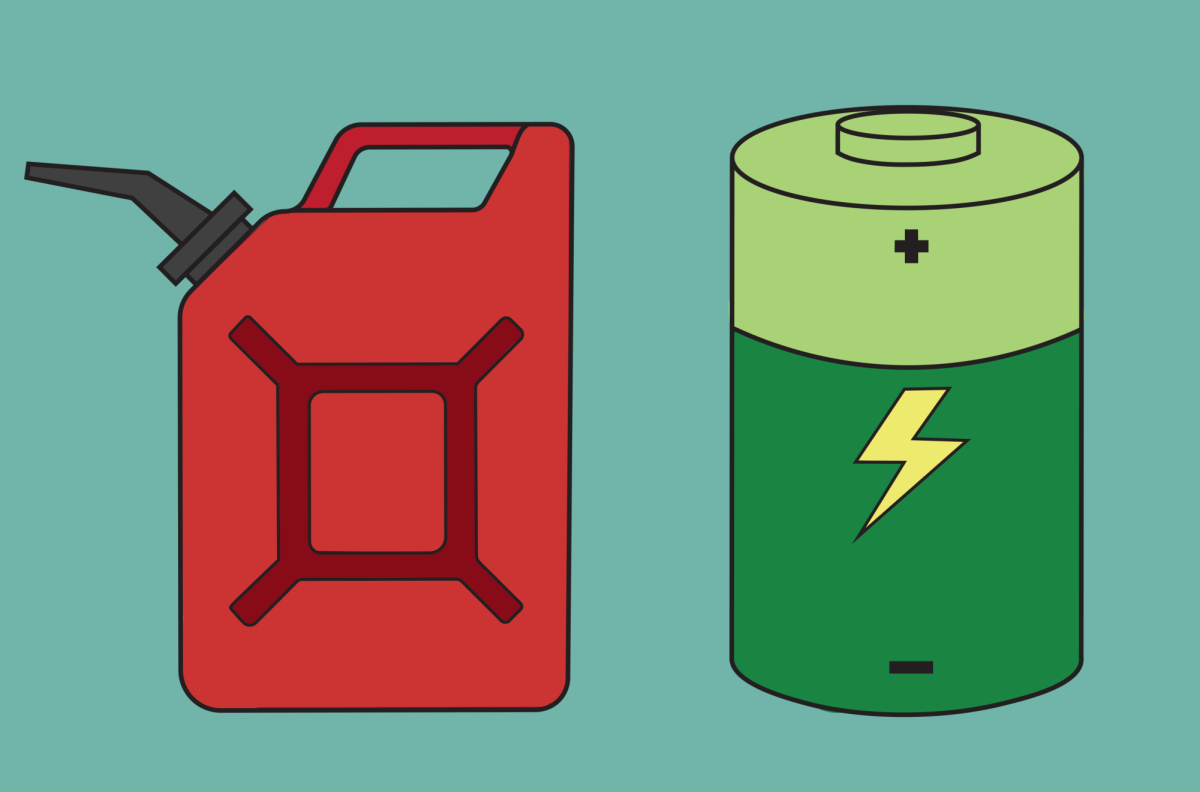
For over a century, gasoline-powered cars were nearly universal. That is, until the popularity boom of the electric car. With climate change looming and transportation accounting for over 28% of U.S. emissions, the competition between EVs and gas cars has only become more heated.
Time for electric vehicles to take the wheel
While initial concerns about electric vehicles regarding a lack of infrastructure and higher costs may have been valid in their early days, the circumstances have changed. After two decades, the infrastructure for electric cars has developed enormously. In light of this progress, it is clear that electric vehicles have only become more advantageous than before.
Unlike gas cars, electric vehicles have no engine. They are powered by a rechargeable battery pack weighing from 900 to 2,000 lbs. that sits along the bottom of the car. This in itself provides advantages. EVs have “instant torque,” meaning they deliver all of their torque as soon as the accelerator is pressed. In comparison to a gas car’s need to rev up, this makes EVs more responsive and energy efficient. The lack of engine combustion also means electric cars produce neither exhaust nor a car’s typical rumbling sound. EVs also lack many parts that, in gas cars, would need regular maintenance or replacement. This lowers the overall cost of owning the vehicle significantly.
In addition to lower maintenance costs, operating without gas can save a lot of money. An EV relies solely on electricity, which has vastly more stable and lower prices than gasoline. Furthermore, electric cars have a better fuel-to-distance ratio than gas cars. The average EV travels 4.4 times farther on a given amount of energy than a gas-powered car, according to a 2023 study by the National Renewable Energy Laboratory. This figure is even higher in the city because of regenerative braking. In a gas car, the wheels are slowed by friction, so kinetic energy is lost as heat when the car brakes. In contrast, an EV brakes by reversing the motor that propels the car, thereby recouping the lost energy and limiting brake wear. All in all, electric cars are more economically efficient than their gas-powered counterparts.
Lack of fuel doesn’t just make EVs cost effective. It helps the environment as well. The average gas-powered car generates 12,594 lbs. of carbon dioxide each year, according to the Alternative Fuels Data Center (AFDC). Meanwhile, the average EV in Washington state is responsible for only about 937 lbs. of CO2 per year, mostly from electricity production, about 93% less than a gas-powered vehicle.
According to the E-Vision Intelligence Report by J.D. Power, a top concern with owning EVs is the lack of infrastructure for electric car charging. These concerns might once have been valid: ten years ago, there were only 34,333 charging stations (public and private) in the U.S., according to the AFDC. However, by 2020, that number became 107,561. This is largely thanks to the proliferation of Tesla charging stations, which used a different charging port than other brands. Now, many manufacturers have made their cars compatible with those ports or sell adapters. This is an enormous advantage, as many Tesla chargers can provide over 100 miles of range in 30 minutes or less. Investment in this infrastructure comes from many places — private and public — and its effects are visible as the number of charging stations grows. While the days of “range anxiety” may not be over, they are certainly numbered.
Electric cars have come a long way since the 2010s. Environmental benefits aside, their financial savings and efficiency more than offset any remaining lapses in infrastructure. Above all, EVs represent the future. Investment in them inspires innovation and the continued pursuit of a better world. The era of gasoline-powered cars is over.
Hit the brakes on electric vehicles
Despite the push for electric-powered vehicles, gas cars remain the universal choice for the average consumer today. More than 92% of drivers own a vehicle that runs on gasoline or flexible fuels — a mixture of gasoline including either ethanol or methanol — according to the United States Census in 2023. The widespread usage of gas-powered vehicles reflects their advantages over electric vehicles, which include having a lower initial cost and well-developed gas station infrastructure.
Criticism regarding environmental effects have been the main argument against gas cars, stemming from their status as a prominent source of carbon emissions compared to EVs. However, their contributions are not as substantial as they’re made out to be. Advances in fuel technology like the introduction of ethanol — a form of renewable fuel that recycles the carbon it emits in its manufacturing process — in gasoline have been pivotal in achieving 40% fewer emissions compared to typical gasoline, according to Argonne National Laboratory in 2021. Currently, 98% of U.S. gasoline contains a content of 10% ethanol according to the U.S. Department of Energy, thereby lowering air pollution and helping transition cars into becoming more eco-friendly.
As for electric vehicles, their “zero emission” claim requires closer scrutiny. The lithium ion batteries that power electric vehicles emit large amounts of carbon in the mining process for its lithium and cobalt components. A single electric vehicle in the U.S. is responsible for the production of 2,551 lbs. of carbon yearly, according to the U.S. Department of Energy. While this may seem insignificant, EVs are notorious for appealing to drivers by targeting their climate consciousness to encourage drivers to make the switch to electric. Companies such as Tesla frequently use marketing phrases like “Zero emissions. Zero carbon footprint.” to emphasize their lack of carbon output, despite the fact that this claim is misleading.
Cost is a major factor in deciding which vehicle to purchase. Gas cars have historically lower prices, making them more affordable for consumers. The average cost of electric vehicles in 2025 is $55,600, far more expensive than the average of $48,600 for gasoline-powered cars, according to Kelley Blue Book. This staggering $7,000 difference makes gas vehicles the more cost effective way to achieve nearly identical means of transportation for families without the added “range anxiety” that comes with an EV.
While both cars provide accessibility, gas cars come with more convenience than EVs. Gas cars have a deeply rooted infrastructure spanning decades, allowing for gas stations to be nearly everywhere, which makes gas cars easier and more efficient to refuel in comparison to the sparse number of EV charging stations. In 2024, there were only 61,000 publicly accessible charging stations in the U.S., a fraction of the 160,000 gas stations nationwide, according to the Pew Research Center. Transportation is an essential part of daily life for many — especially for students who frequently commute — sparking the growing need for convenience. The simple task of refueling a gas tank usually takes around three to five minutes; for electric vehicles this can become tedious, taking an average of 30 to 45 minutes for a full recharge. Since the majority of people live without accessible at-home-charging, owning a gas car is a huge time saver.
Ultimately, gas cars are the more accessible and practical choice for consumers today. Electric vehicles might be the future of transportation, but changes are still needed to make them more affordable and convenient.