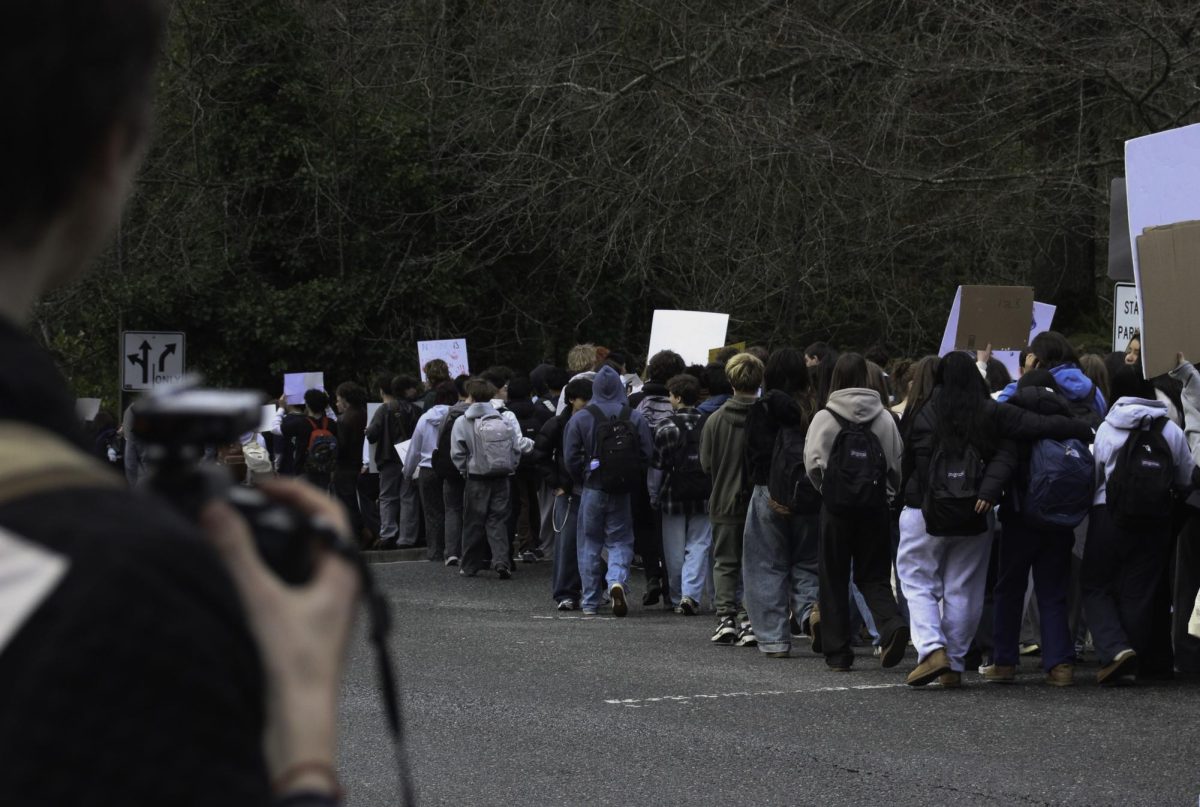
As students consume pressing news on social justice issues, many feel driven to express their voice through sit-ins, rallies, walkouts and other forms of protesting during school hours. Around 40% of college students have been involved in campus protests, according to a survey by BestColleges. However, in the same survey, 47% of students reported that they believe student protests disrupt learning. This raises the question of whether student protests in school are actually effective, and whether they should become normalized as a form of youth voice. Student walkouts from school undeniably can establish a precedent for youth activism, display non-compliance with social injustices through exercising their First Amendment rights and show unity among classmates. However, many students do not always know the complete motivation behind each walkout, and instead use protests as an excuse to cut class. Due to student walkouts often happening at or near school campuses and not at government office buildings, they often do not result in direct government action. Although student protests have the potential to be influential and impactful, the current execution is problematic because many students lack awareness about the cause, and they do not supplement these protests with vital follow-through.
If students’ protests are to be taken seriously by teachers, administrators and the local community, the protests must be executed more intentionally and with a stronger display of purpose. Many student protests model just a one-time interest. This is a structural issue with the way student protests are being executed because, ultimately, advocacy is not a one-time thing. In November 2023, around 120 IHS students participated in a walkout to educate fellow students on the war in Israel and Gaza, according to the official Nordic News website. In June 2025, IHS students continued speaking up in an additional walkout to advocate for higher wages for IHS’ drama teachers and fairer compensation of teachers amidst budget cuts. In February 2026, students held another walkout to protest against ICE. However, the schoolwide sentiment faltered when it came to continued discussions in the aftermath of these walkouts. One way to continue speaking out against issues beyond school protests is to be cognizant about what is occurring both in local and global news, which enables students to participate in local city protests. These can supplement schoolwide protests and be more influential towards local policymaking. Additionally, students can lobby, consistently advocate for change on social media and support politically-conscious businesses. Sustained action following the protest is imperative to show continued care of the sentiment in student activism.
Student protests inherently hold great power, capturing youth emotion and involvement regarding systemic issues, but conflicting information or misinformation on the purpose of the protest can hinder the effectiveness of it. The message and purpose of these walkouts will be more coherent and powerful if student participants and observers know what these protests are advocating for beyond the surface level. Students should research what they’re protesting against if they are going to leave classes for it, as these one-day disruptions to learning are only worth it if the purpose is clear. Furthermore, staff and members of the general public may view student protests as inauthentic because of students just wanting to skip classes or join their friends. The concept of youth voice and empowerment is something educators should support if they are not already, as advocacy is a core life skill that should be learned in high school. However, this support may come earlier if student organizers form a more clear and united front, allowing both staff and students to gain more clarity on the intention. This can increase student participation and therefore may lead teachers to alter lesson plans to accommodate student protests. Standing up for social injustice is nothing short of imperative as it exercises democracy and carries foundational awareness that cannot be taught solely in classes.
Furthermore, if students truly care about the issue they are missing class for, they must stand up for the issue both in public and in private. This is a strong way to set a precedent and display genuine interest for being an advocate, which in the long run may result in teachers supporting and better understanding protests. If students decide to attend protests only because it is popular among friends, but they choose not to speak up when hearing something unjust in discussions or when watching it happen, then it reinforces the problem. Protest organizers can provide additional ways for students to remain involved to truly exhibit the purpose of protests — deeply caring about the issue beyond the singular event. Students who are involved in school protests should extend their actions to continue being a long-term advocate and amplify their voice in often blurred and easily swayed youth opinions.
As the next generation, youth voices are undoubtedly needed, and students should speak up and advocate for their future. Protests in general are vital to civic engagement, and although they are not a part of the conventional school curriculum, they build civic competence and social awareness beyond the bubble one might live in. However, student protests in schools must be supplemented with subsequent actions to mitigate stigma on student protests in school, and this is an area high school student organizers and students can improve. This will increase the power and efficacy of student protests and, ultimately, set a precedent for continued youth advocacy.