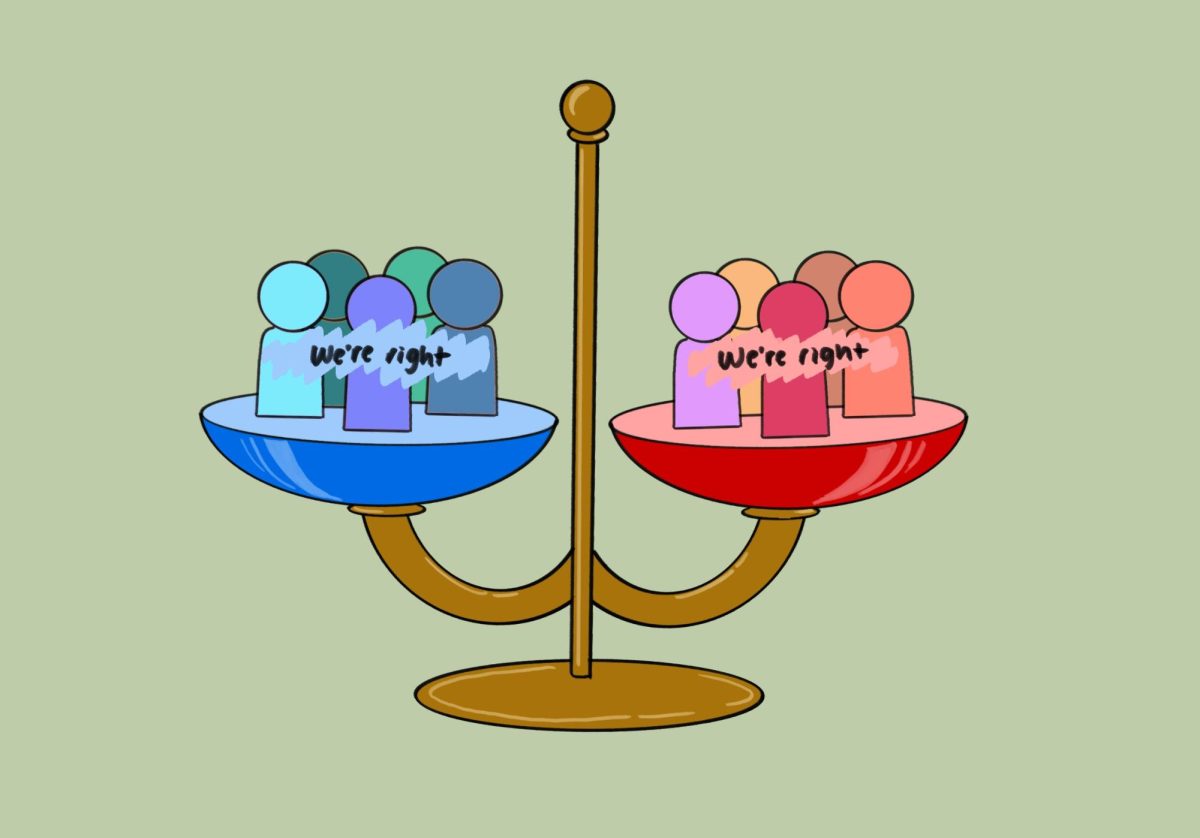
Perhaps you think Charlie Kirk’s death was insignificant, but your friend believes it to be a tragic event akin to the assassination of President Lincoln. Maybe you support the tariffs on Canada and Mexico, but your friend is peeved by the inhibition of free trade. As students mature, they solidify their political opinions and start speaking up for what they believe is right. From President Donald Trump’s 2024 election to the 2025 government shutdown, students are constantly exposed to political disagreements. It’s becoming increasingly difficult for students and classmates to avoid discussing politics.
In adult workplaces, discussing politics is largely frowned upon because of the tension and hostility it can create, which can be detrimental to the work environment. Should this unspoken guideline also be reflected in classrooms and schools? Should students avoid sharing their political beliefs with peers? Students are expected to understand and discuss opposing perspectives in schools, so the same expectation should apply to politics. Students should discuss their political beliefs with their peers to promote understanding and reduce the risk of conflict, even when their views differ.
Political discussions easily translate to conversations about personal views. When students form political opinions, they gravitate towards parties and figures whose policies seem to match their beliefs. Thus, when students talk about political figures, the conversation naturally reflects their own beliefs and values. Two students with opposing political views may find they hold the same values, but support different policies based on such opinions. Additionally, students who consider other political viewpoints gain a crucial understanding of the country’s political state, develop skills of being open-minded and find new opportunities for reflection. Deeper thinking about a topic encourages the creation of new interpretations of political ideologies, allowing a more comprehensive understanding of the political landscape. Teachers can use political discussions and debates to teach critical thinking and smooth out misunderstandings between students. Teachers can take the opportunity to inform students of the multiple angles of an argument instead of only discussing the most popular opinion.
Students can also use political discussions to sort out facts from falsehoods. Teenagers are particularly prone to receiving political misinformation. Social media content is often intentionally provocative to spark reactions and go viral. This content can falsify dates and times of an event, material about a candidate, the voting process and more. Four out of five teenagers rely on social media as one of their top sources of information, according to the Center for Information and Research on Civic Learning and Engagement. This startling statistic reveals the incredible impact that social media misinformation can have on teens’ political opinions. The incendiary nature of misinformation can cause students to develop aggressive outlooks. This issue can be resolved through civil debate, where students utilize their critical thinking skills to identify true information. In a society filled with corrupt social media information, a dependable standard of truth is precious.
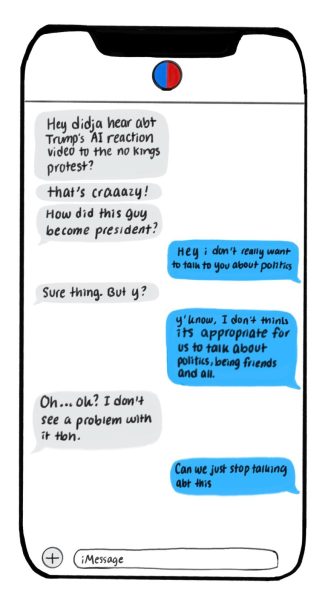
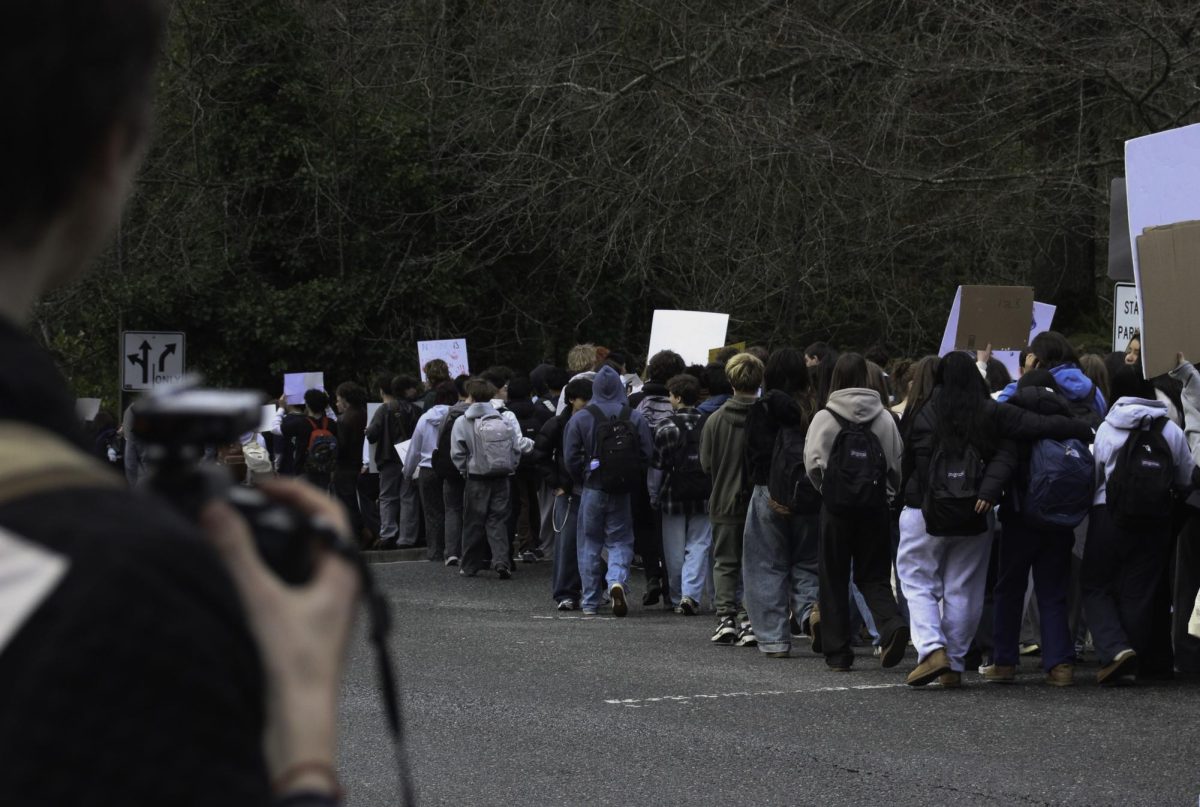
Nevertheless, there are legitimate reasons to avoid politics in schools. The fear of sharing political views could create conflict among peers. According to Pew Research Center, as political violence continues to grow, marked by attacks on political figures and marginalized groups, the fear of violence extends to school grounds. Students may not want to strain their friendships by bringing up politics in a conversation, and some might be afraid that a simple argument over politics could escalate into something more explosive and hurtful. Teens who hold a minority political stance may be apprehensive about sharing their political stance with peers, fearing that they will be attacked for their beliefs and isolated by friends. Within IHS, in Nov. 2024, around 52.7% of students affiliated themselves with Democrats, 12.5% of students with Republicans and 34.8% with no affiliation. Fearing potential conflict, many teens may intentionally avoid the topic in hopes of preventing tension with peers.
Discussing politics can cause hostility, but the severity is somewhat exaggerated. A healthy friend group should be able to have a civil political conversation without devolving into a rage-fueled shouting match. In fact, teenagers who discuss politics with their friends can build chivalrous disagreement skills. Students may be more cautious and attentive when discussing risky topics like politics because they are unwilling to jeopardize their relationships with peers. As they listen to their friends’ points of view, students learn to understand the rationale behind opposing political angles. In all actuality, a proper conversation about politics between students and their friends will decrease the likelihood of political violence erupting on school campuses, and potential tension between them will dissipate if both parties stay courteous even when their stances differ. There are also online resources that allow students to build their political discussion skills. People with opposing political viewpoints can still enjoy a strong friendship with one another, according to The Civility Project, a collaboration by journalists Nolan Finley and Stephen Henderson. Students can bring up politics by sharing their personal experiences and how those experiences impacted their political beliefs. They also express curiosity for other political stances, work on finding common political ground, and more.
Although politics are a largely discouraged conversation topic, it is beneficial for teenagers to broach the subject with their friends. Discussing political views naturally leads to discussion about values and rights, and students can use the opportunity to connect with one another more deeply and gain understanding behind different political approaches. As students begin to learn why others think about politics the way they do, the risk of political violence in schools decreases because teens are able to empathize with opposing views rather than lashing out. Overall, more teenagers should discuss politics with friends and peers to cultivate a welcoming and understanding school environment.