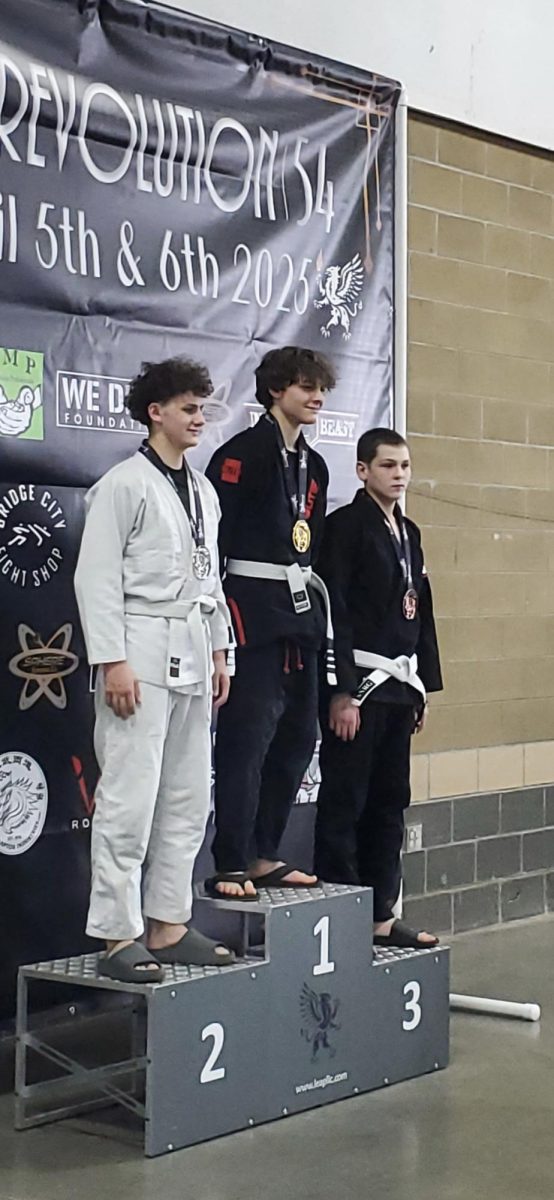
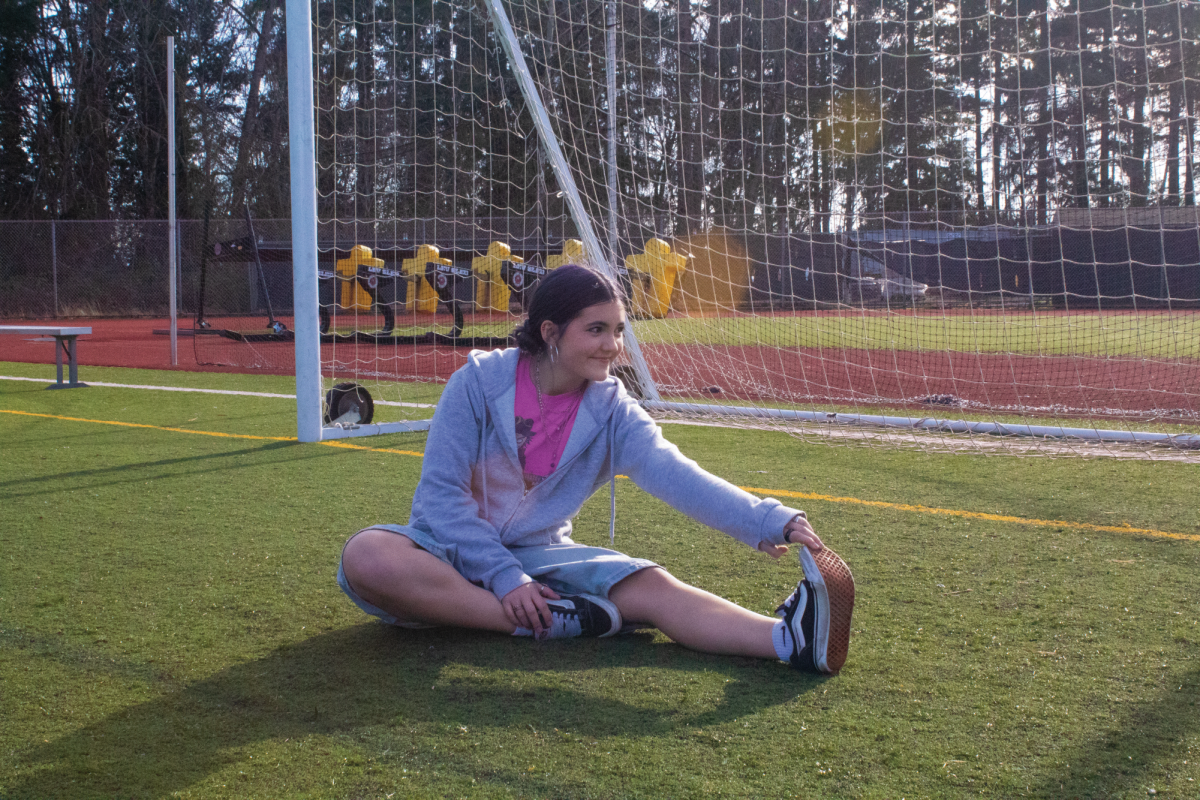
Whether it’s club sports, school sports or both, students have a wide variety of options for an active lifestyle. In fact, more than 8.2 million students participated in high school sports across the U.S. during the 2024-25 school year, a record high that encompassed approximately 33% of the student population, according to the National Federation of State High School Associations. While any sport comes with its fair share of risks — from long-term injuries to minor cuts and bruises — many students choose to play anyway.
Sophomore Serenity Harris (she/her) has been playing soccer at Inglemoor and for an outside club since she was four. She previously played goalkeeper for her team before her foot injury. Despite knowing the high risk of goalkeeping due to the extensive strain on wrists and hands, Harris said her love for the sport made it worth it.
“It’s a really good community-building experience,” Harris said. “When I came to Inglemoor, I knew almost nobody, and soccer was when I knew that I was able to make friends at the start of the year, and I just really love soccer.”
Harris deeply enjoys soccer, especially goalkeeping, and she said that the entire community she’s experienced has been amazing. However, while supportive teammates are great, Harris said that in some cases, other teams may not display sportsmanship.
“That’s why injuries are so common, because there’s a lot of teams who purposefully injure the goalkeeper,” Harris said. “There’s such a terrible mindset about injuries in soccer because sometimes it’s encouraged to injure the other team.”
Even though Harris wears protective equipment to minimize the risk of injury, she’s still suffered numerous injuries such as concussions, ankle injuries and broken fingers. Recently, Harris had surgery for an injured foot.
“I was playing soccer, and somebody pushed me from behind. I snapped my ankle and it twisted, and I tore three tendons,” Harris said. “Then my injury got a lot worse because I didn’t know its severity, and so I played on it for one year before I did the surgery.”
Harris said that everything, including walking, before her surgery, was extremely painful. She couldn’t play soccer without a brace on her foot. Eventually, her injuries escalated to the point that she had to travel on a scooter, which made it difficult for her to navigate spaces in her everyday life. Harris said going up and down her two story house and relying on her parents to drive her to school instead of taking the bus was both difficult and inconvenient.
“I’m really glad that I went to a specialist,” Harris said. “I don’t think I would be able to walk very well right now if I hadn’t had surgery.”
After committing so much time into soccer, Harris said that it felt devastating to be injured and unable to play for the school team in her freshman and sophomore years. However, Harris said that this experience has made her care much more for her sport, and she now puts much more focus into her conditioning, rehabilitation and health.
“Just focus on the positives and continue to work really hard to heal and go to PT if you can,” Harris said. “It’s really easy to think that you’ll never be able to go back to your sport and never be able to be as good, but there’s so many things that you can do to train when you’re injured. There’s so many opportunities to get better, and you just have to stay positive.”
Sophomore Nolan Williams (he/him) began to play hockey after being inspired by his father. He has played for over eight years. Similarly to Harris, Williams also has to deal with the dangers that come with the combative nature of contact sports.
“Every sport comes with a certain amount of risk, but we play with knives on our feet, so that’s definitely another thing to look out for,” Williams said. “For the most part, you have people who know what they’re getting into, but when you have fun, it doesn’t really matter that much.”
Williams said that typically, people will run into each other as hard as they can to stop their opponent from getting the hockey puck, which results in both minor and major injuries in almost every single hockey game. For this reason, every player is required to wear full gear including shin guards, padded pants, shoulder pads, elbow pads, gloves and a helmet to minimize injury. However, injuries still happen. Williams said that last year, the captain of his hockey team missed an entire season to a tedious rehab process following his ankle injury and was out for the rest of the season.
“He might be getting back around now, but it was really bad, so he can’t compete,” Williams said. “It takes a long time to get back in with the rehab process.”
Fortunately, aside from pulling muscles and some minor fractures, Williams hasn’t suffered any major injuries. Even after seeing the risks firsthand with his captain,Williams said he’ll continue to play.
“I love hockey so much — it’s my favorite thing in the world,” Williams said. “Whenever you can get back on the ice, it’s always a huge thing, and always just keeping loyal to your team, and you always want to be there.”
Putting in effort into a sport is worthwhile for many reasons, from the sense of community to the simple joy of getting to play. Despite facing risks and dangers in his sport, Williams said it’s important to place well-being above all else.
“Take it slow. I’ve experienced firsthand what major injuries can do to someone, and I never want to rush that,” Williams said. “Make sure you’re 100% when you come back.”